Famicom Detective Club Sequel: A Masterful Murder Mystery?


Emio, the Smiling Man Unveiled as Famicom Detective Club GameFamicom Detective Club Launches New Murder Narrative After Three Decades
The initial Famicom Detective Club games, The Missing Heir and The Girl Who Stands Behind, were released in the late 1980s. They let players assume the role of a young man solving murder mysteries in the Japanese countryside. In this new entry, Emio – The Smiling Man: Famicom Detective Club, players will again become assistant detectives, this time at the Utsugi Detective Agency, tasked with solving a series of murders connected to a notorious serial killer known as Emio, the Smiling Man.
As announced by Nintendo on July 17, the game is slated for global release on August 29, 2024 for the Nintendo Switch and marks the first new Famicom Detective Club story in 35 years. It was hinted at the previous week through a cryptic trailer that showed a mysterious man wearing a trenchcoat and a paper bag over his head that had a smiley face drawn on.
"In Emio – The Smiling Man: Famicom Detective Club, a student has been found dead in a chilling manner, his head covered with a paper bag with an eerie smiling face drawn on it," the latest installment's synopsis states. "This unsettling image bears a striking resemblance to a recurring clue in a string of unsolved murders from 18 years ago, as well as Emio (the Smiling Man), a killer of urban legend who is said to grant his victims ‘a smile that will last forever.’"

Assisting you in the pursuit of the truth behind Emio, the Smiling Man, is Ayumi Tachibana, a fellow detective renowned for her exceptional interrogation skills. Ayumi is a recurring character in the series, introduced in the first game. Leading your unit is Shunsuke Utsugi, the detective agency director, who investigated the same unsolved murders eighteen years prior. Shunsuke appears in the series' second installment and takes the game's orphaned protagonist as his assistant.
Fans Polarized Over Announcement
When Emio, the Smiling Man, was cryptically previewed by Nintendo, it quickly gained traction and interest within the gaming community, perceived as a starkly different type of Nintendo game. Unlike the company's typically cheerful games, this smiling man was anything but joyful.
Amidst the speculation, one Twitter (X) user amazingly predicted the teaser's subject. "Insane theory: Emio is actually the antagonist of a new, darker 3rd Famicom Detective Club game following the remakes of the first two games on Switch," the fan wrote.
It seemed plausible, and they were correct. While many Famicom Detective Club fans celebrated the revival of their beloved murder mystery point-and-click game, others were less enthusiastic.
Some players disliked the newly announced installment, expressing their disinterest in a visual novel on social media. One user humorously suggested some Nintendo fans were disappointed and angry at the reading involved. Another player replied that these fans "were probably hoping Emio would be a different genre, like action horror or something."
Famicom Detective Club Explores Different Mystery Themes
The Famicom Detective Club series has garnered acclaim for its captivating narratives and atmospheric storytelling. The original games, which were remastered for the Nintendo Switch in 2021, have had a lasting effect on fans. Inspired by the enthusiastic reception to these remasters, Sakamoto felt driven to create a brand-new installment in the series. "I knew we'd be able to make something excellent. So, I decided to do it," he stated in the video.
According to an old interview with Wired, Sakamoto drew inspiration from horror filmmaker, Dario Argento, whose masterful use of mood-setting music and rapid cuts influenced Famicom Detective Club. The Girl Who Stands Behind was inspired by Argento's method of interweaving music and visuals, as seen in the murder mystery film Deep Red.
In the same interview, series composer Kenji Yamamoto recalled that he made The Girl Who Stands Behind's final scene as frightening as possible, per Sakamoto's instructions. The composer employed a technique where the game's audio volume dramatically peaks in the final scenes, creating a jump scare effect with the sudden audio shift.

While The Smiling Man centers on the theme of urban legends—often spooky tales and rumors about mysterious and perilous events—the prior installments in Nintendo’s Famicom Detective Club explored themes of superstitious sayings and ghost stories.
In The Missing Heir, you investigate the mysterious death of Kiku Ayashiro, a member of the affluent Ayashiro family that owns a vast plot of land, passed down through generations, in Myoujin village. The village has an ominous saying that the deceased will return to kill anyone attempting to steal the Ayashiro family's wealth. You soon discover a terrifying connection between this saying and the serial killings in the game.
Meanwhile, as a promising detective in The Girl Who Stands Behind, you must find the culprit who took the life of an innocent girl, Yoko, and unsettled her high school community. It soon emerges that Yoko was deeply involved in investigating "The Tale of the Girl Who Stands Behind," a ghost story of a bloody girl haunting the school.
A genuine product of intense brainstorming

In numerous interviews, Sakamoto has described the creative liberty afforded to him during the conception of the Famicom Detective Club series. Nintendo only provided the title, granting him complete control. He recalled Nintendo's hands-off approach: "Whatever it was you came up with, they wouldn't say anything."
Upon their initial Japanese release, the first two Famicom Detective Club games garnered favorable reviews. Both Famicom games maintain a 74/100 Metacritic score based on critical assessments.
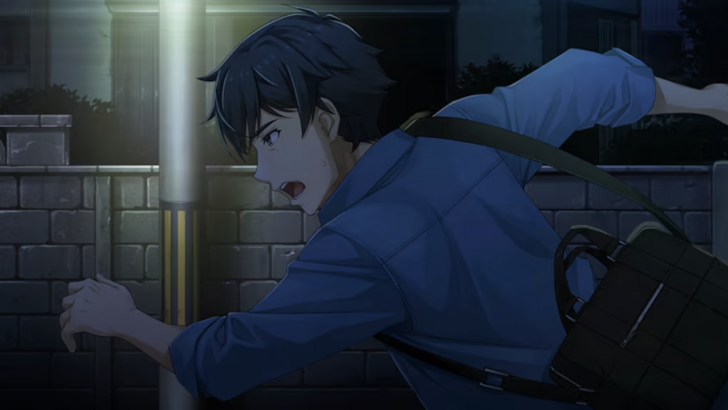
Moreover, it appears that Emio — The Smiling Man will contain a divisive ending that the series producer hopes will be continually debated among players "for a long time to come." The game’s script "cuts right to the heart of what I had in mind from the start, so the story’s ending may be controversial for some people," Sakamoto said.
-
 One LabProcedural mode Vast library of spectacular effects Fully non-destructive editing Quick looks Random mode Effect tree Video generation and editing Conclusion One Lab is a revolutionary leap in the landscape of creative applications, which stands out
 -
 Lensa: photo editor & AI artLens CorrectionTransform Your Selfies with Flawless Skin EffectsEye Corrector EditorIllustrator Photo EditorBackground EditorMore Than Just Photo EditingConclusionLensa is a cutting-edge photo editing app built for perfecting portrait selfies. Featur
 -
 Viggle AI Dance Photo: SelfieUThe Magic of AI TransformationBreathtaking FiltersAdditional Premium FeaturesSelfieU is a revolutionary AI photo editor and face app that effortlessly turns your pictures into stunning works of art. With its advanced AI Labs for superior image qualit
 -
 LightX AI Photo Editor RetouchTransforming photo and video editing with its AI toolkitComplete photo and video editing suitePhoto and video templates, 3D elements, and animated clip artFinal thoughtsLightX stands out as a groundbreaking mobile app that reshapes visual content cre
 -
 Facetune: AI Hair/Photo EditorTurn Your World into a FantasyTools for Perfect SelfiesPresenting Your Best SelfEnhance Your VideosAn All-in-One Photo and Video ToolkitEasy Beauty Touch-UpsFinal ThoughtsFacetune is a modern photo and video editing app, known for its advanced AI-pow
 -
 CFChuze Fitness provides a dedicated Android app for fitness lovers, enabling seamless tracking of workouts on cardio equipment, easy goal management, and connectivity with popular apps like Map My Fitness and Fitbit. Members can also check class timet